Inside the Museum of Witchcraft and Magic: A Journey Through Unique Artifacts

Our recent road trip took us to the incredible Museum of Witchcraft and Magic in Boscastle, and we were captivated by the strange, wonderful, and sometimes eerie history on display. We found ourselves face-to-face with four artifacts that tell a compelling story of old folk traditions, magical practices, and the people who believed in them.

The Unseen Protectors

One of the fascinating traditions we saw evidence of was that of concealed cats, believed to offer magical protection for a home. The museum has a pair of these mummified cats that were found under a front door in Bristol. This tradition speaks to a world where magical beliefs were a hands-on part of everyday life, offering a silent guardian against malevolent forces.

The Iron-Strapped Human Skull

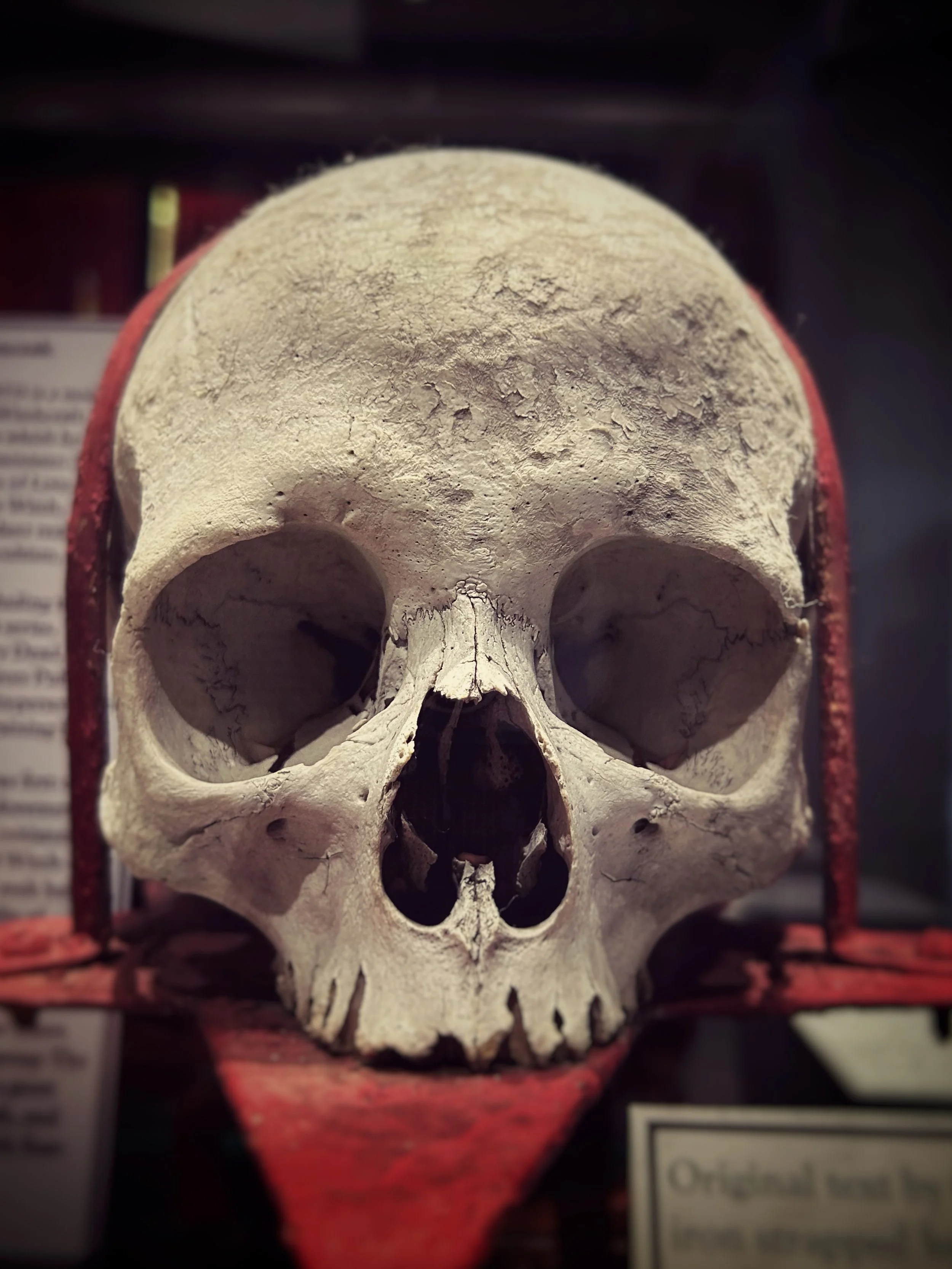
Among the museum's most captivating artifacts is this iron-strapped human skull. According to Cecil Williamson, the museum's founder, it belonged to a wise woman from the north Bovey area who affectionately referred to it as “her friend.” She would tell her clients, “Well me dear, I don’t rightly knows what I a do - till I have asked me friend. I’ll let thee know later.” While the story of “Granny Mann” is a powerful piece of its history, we can’t help but wonder who this person was long before the skull became a tool for magic. The thought of this relic is both eerie and beautiful.


The Helmet of the King of Witches

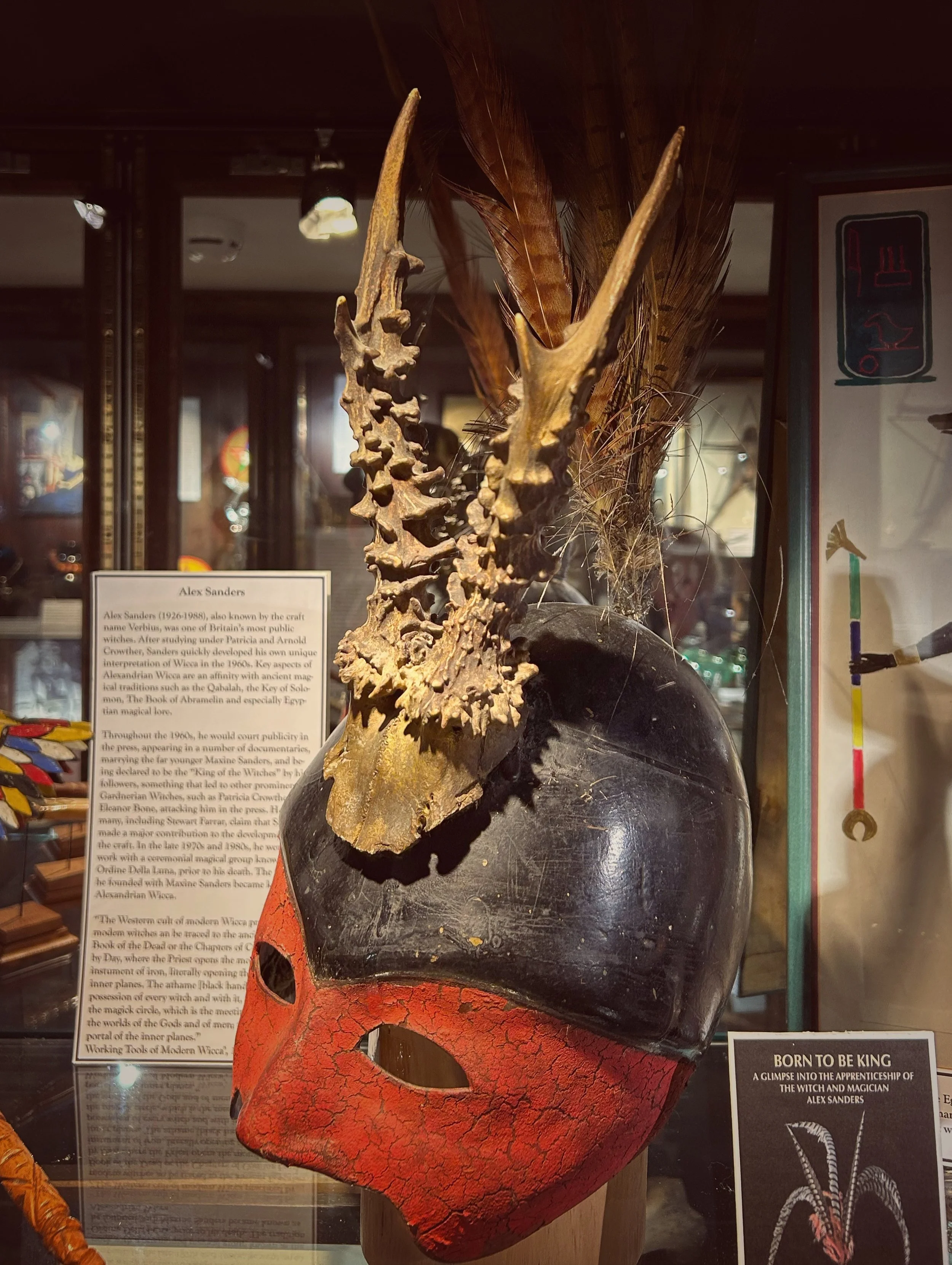
Our visit also brought us face-to-face with a key piece of modern magical history: the ritual helmet that belonged to Alex Sanders, the “King of the Witches.” This incredible artifact was used by Sanders for many years and was adapted several times. Early photographs show it without horns, but in a well-known image on the cover of Stewart Farrar’s book, What Witches Do, it’s shown with straight horns and large feathers. Seeing how the piece evolved truly brings to life the hands-on nature of these magical traditions.


The Strange Case of Harriet

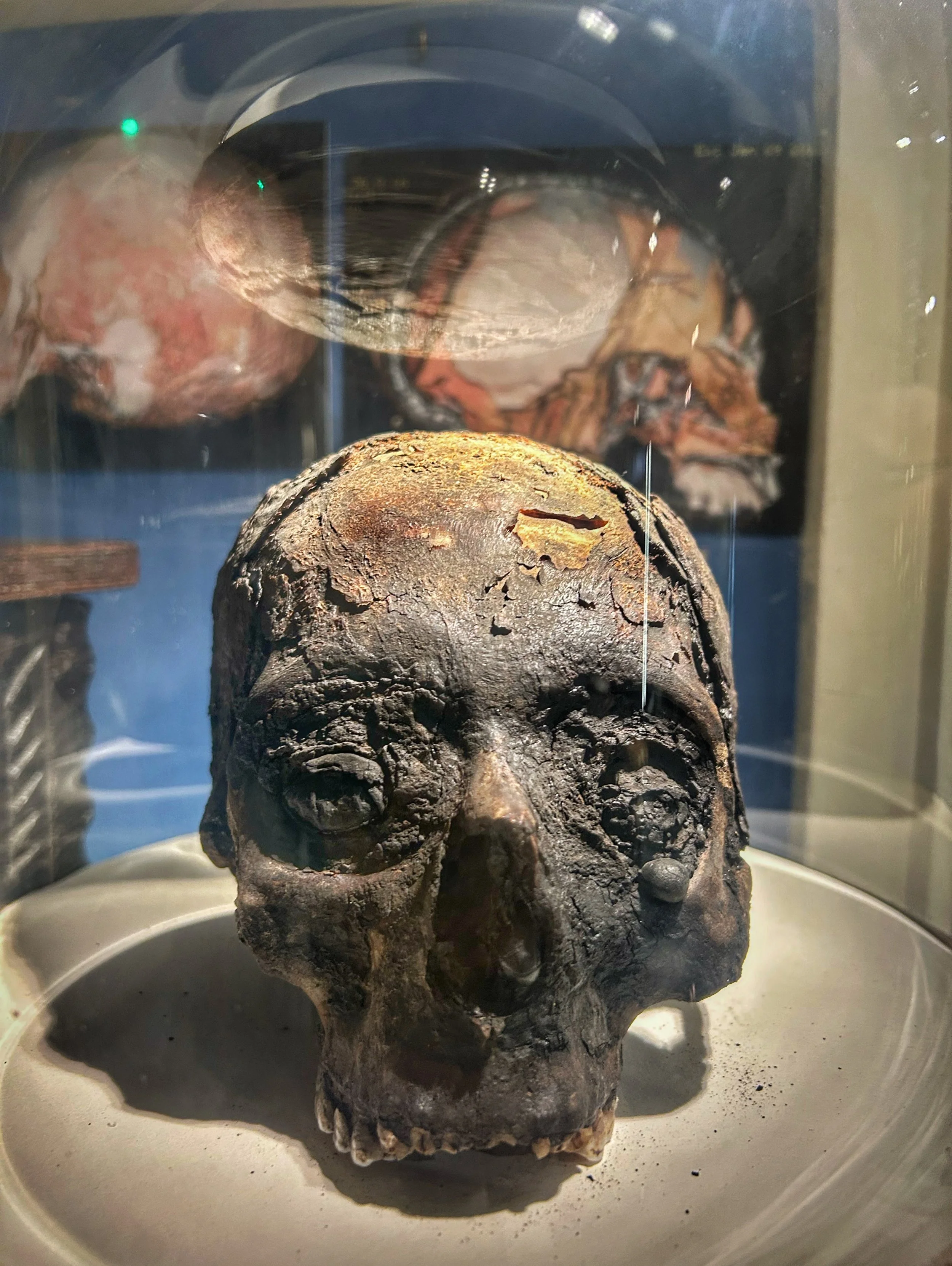
Perhaps the most unique find in the entire museum is “Harriet,” a tarred head that holds an incredible and poignant secret. Initially, she was thought to be a medieval saint or criminal, but forensic tests revealed a much more remarkable truth: Harriet was actually a female Egyptian, mummified with tree resins around 200 BC! Her head was likely stolen by treasure hunters, sold as a fraudulent relic to a European church, and eventually found in the rubble of a bombed-out London church during the war. Her journey through time and belief is a testament to the strange ways artifacts can travel. The exhibit text ends with a powerful plea, asking visitors to not dislike the head and to spare her a kind thought or smile—a poignant reminder that she was once a person who could laugh and cry like us.

These unique artifacts are more than just items in a collection; they are powerful testaments to the enduring nature of folk traditions and magical beliefs.

Frank Turner on History, Folk Music, and Why Heroes Are "Bastards"

Frank Turner is more than a musician; he’s a self-proclaimed "devastatingly tedious history nerd" with a deep pride in his Wessex roots. In an exclusive interview, he talks about his passion for the past, the inspiration behind his song "An English Curse," and his philosophical views on being a songwriter and a contrarian.

Finding the Folk in England

Frank's initial musical influences were American folk artists like Neil Young and Bob Dylan. However, after facing pushback from purists in the traditional music community, he set out to find England’s own folk heritage. He discovered that English folk music, often overshadowed by its Scottish and Irish counterparts, is full of historical storytelling. He delved into the archives of Cecil Sharphouse and listened to artists like Martin and Liza Carthy, realizing there was a way to fuse his love for history with his love for music.

This research led him to write "An English Curse," an a cappella track inspired by the traditional field songs of England. He recalls an amusing incident at the Cambridge Folk Festival, where a group of "aging hipsters" with notepads demanded to know the song’s "provenance." They were "horrified" to learn it was an original composition, an act of subversion he greatly enjoyed.

The Story Behind the Song

The song’s inspiration came from a local folk tale, a version of the death of King William II that Frank found in the book Folk Tales of Hampshire. While academic history points to a plausible assassination by his brother, the folk tale centers on a curse placed on William the Conqueror by a blacksmith named John, whose land was stolen by the Normans.

For Frank, the value of folklore isn't in its historical accuracy but in what it reveals about the people who tell the stories. He believes folklore is a "tiny little fissure through which the other voices can escape," representing the grievances and anti-authoritarian spirit of the common people. He also loves that traditional folk heroes, like the original Robin Hood or Reynard the Fox, were not the sanitized, morally upright figures we know today. They were chaotic "bastards," a character type he finds more interesting and authentic.

An Exercise in Humility

Frank sees the study of history as an "exercise in humility." He finds it strange that not everyone is curious about how the world came to be the way it is. For him, understanding history is a way to recognize the limitations of our own knowledge and to appreciate the lives of those who came before us. He confesses to waking up at night in a panic that he will never read all the books he wants to.

He argues that history is not a moral exercise, and we shouldn't read it just to find people to be angry with. It is an opportunity to learn and to understand that the ethical codes of the past were contingent, just as ours are today.

Music and Activism

While many would label him a "protest singer," Frank is cautious about the title. He views music as an "end in itself," not a means to an end. He writes songs about heartbreak, whiskey, or imposter syndrome just as often as he writes about politics. However, he does believe in using his platform to support causes. He is a patron of Able2UK, a charity that works on disabled access to music venues, and supports Safe Gigs For Women, which tackles sexual harassment at shows. Ultimately, for Frank, the joy of writing songs comes first, and if his work encourages people to think about the world, that is its greatest reward.

Why MP Danny Kruger's Vision of England is a Dangerous Fantasy

This is a response to Danny Krugers speech to parliament a few weeks back. Perhaps Im preaching to the choir here, but I think it’s worth saying. If you haven’t seen it perhaps go check it out first here

I want to talk about Kruger's speech to Parliament a few weeks back. His powerful rhetoric conjures up a romanticised vision of England’s past, but let’s be honest, it paints a dangerous and misleading picture of our present and future.

When you listen to his words, you hear this deep sense of national decline and moral panic. The thing is, his proposed solutions—like enforcing one faith and just tossing aside human rights—they’re not going to fix the country’s problems. In fact, they're the very things that would make them worse.

Let's start with this big claim he made. He said that Parliament has authorised "the killing of the elderly and disabled." That’s not just a rhetorical choice; it’s a total misrepresentation of a bill that actually offers compassion to the terminally ill. The "Terminally Ill Adults (End of Life) Bill" isn’t some license for a cull of the vulnerable. It's a carefully considered piece of legislation with really strong safeguards.

This bill is designed for mentally competent adults with a terminal illness and a prognosis of six months or less. The key word here is "choice." It's a bill that gives people the dignity to end their suffering on their own terms, free from coercion, with both medical and legal oversight. To frame this as a great sin is to completely ignore the profound pain and suffering many people face at the end of their lives. It's to deny them the very autonomy that’s a cornerstone of our modern society.

And here’s something even more alarming: Kruger's rhetoric goes from defending his own faith to actually calling for the active oppression of others. I mean, the most recent census shows the UK’s population is 46.2% Christian. That makes you wonder why he feels so oppressed. His suggestion that other religions, including Islam, paganism, and druidry, must be “pushed back to the fringes” and “banished from public life, schools and universities” is just… a chilling echo of a time we should have left behind.

As we’ve discussed on a previous episode, the Church of England's own history includes the brutal suppression of even other Christians, with the persecution of Catholics directly leading to events like the Gunpowder Plot.

The 'horrific' and violent abuse of more than 100 children and young men was also covered up within the Church of England for decades, according to the conclusion of a damning report released last year.

This is a stunning display of perceived victimhood from a member of the majority faith—a faith that is still the "chaplain to the nation"—against minority groups who are just trying to exist and worship freely. A healthy, confident faith doesn't need to destroy others to thrive; it can exist peacefully right alongside them. This call for religious cleansing, no matter how politely he says it, is a direct challenge to the very idea of a pluralistic, tolerant Britain.

When Kruger laments that a decline in Christianity is the cause of all the nation’s problems, it’s a super convenient deflection. It completely ignores the real, tangible failures that have led us to where we are: a political class that's often accused of corruption, a public health system in crisis, and an economy that leaves a lot of people feeling insecure.

And as an example of this political class, it's worth noting that Kruger, who is my former local MP, is a Member of Parliament who receives an annual salary of over £93,000. And like all MPs, he's claimed significant amounts in business costs, including rent for a London flat and other office expenses. Blaming the country's woes on "innocent people" who follow different spiritual paths is a disingenuous and cowardly move.

The truth is, society's morals—our collective understanding that we shouldn't steal, lie, or cheat—don't come from a monopoly of one religion. They’re the practical, shared rules of a functional society, developed over thousands of years to let people live together in peace, no matter what they believe.

Finally, let's talk about his most poetic and dangerous metaphor: “To worship human rights is to worship fairies.” Kruger meant this as a damning indictment, suggesting that our secular rights are imaginary. But we can flip that on its head. The “fairy rights” he dismisses are the very bedrock of our freedom.

The right to free speech, the right to worship as we choose (or not at all), and the right to bodily autonomy are not the product of a singular, state-enforced faith. They are the hard-won victories of people who fought to create a society where no single group could impose its will on everyone else. To abandon these "fairy rights" for a government that enforces a "common creed" would not be a return to some golden age. It would be a return to the dark ages of religious persecution, the end of our pluralistic society, and the beginning of a dictatorship of faith.

Woodchester mansion

While sorting out my hard drive I found this which is dated 2013. Not sure if that’s an accurate date, but it could be. While my opinions may have changed since then, I thought some might find it an amusing, if skeptical read about a ghost hunting experience in Woodchester mansion. In the piece I say Im an atheist, I would probably be more akin to agnostic these days, but anywho - enjoy:

Wyrd Wessex is a reader-supported publication. To receive new posts and support my work, consider becoming a free or paid subscriber.

I attended this ghost hunt as an atheist who has had more intense paranormal type experiences than most believers. As a teenager I awoke, one morning, to find that something was sitting on my chest pinning me to my bed. I couldn't move at all. I tried to call out for help to my Mum who I could hear was busy about the house, but found that I had no voice. This lasted for probably a few seconds, though felt much longer in my terrified state. At the time it seemed like some kind of paranormal experience, which I was told was an evil spirit or some such nonsense. Of course I have since found out that this can be explained by science and is known as sleep paralysis - still terrifying when it happens. 

I had hoped to experience something similarly paranormal at this event, even if it had another explanation. I love the science and psychology behind paranormal experiences. I do not intend to change anyone's mind, just give my experience. I hope that I do not offend the haunted happenings team or any of the other guests, I would love to join you again at another event. This is just my honest account, anything else would not be true to myself.

The evening began with a brief introduction to haunted happenings and the team (Dave, Vicky and Carolyn ( a medium). We were also joined by Chris from Woodchester mansion.

Chris began the night by giving us a tour of the building. There were to be certain areas we would concentrate our experiments later in the evening:

  • Bathroom

  • Kitchen

  • Upper/middle floor corridor

  • Chapel

  • Basement

Chris and the haunted happenings team very professionally refused to give us any tales of sightings, ghosts or previous experiences that might sway our experience. However we were given a very full history/folk tales? of the building and its grounds, which included most notably talk of Kitchen staff and the deaths of several airmen who drowned in the lake and the possibility of their bodies having been temporarily stored in the game room.

We returned to the base room and were split into several smaller groups for the rest of the night. We were to be in group C - a lovely bunch, who were up for a laugh. We were shown how to use several pieces of equipment and stopped for a brief tea break. My first experience of the building alone, as I wondered through the building to the loo!

Our first vigal was held with Vicky in the basement, where we attempted table tipping. After some time of small table movements and several questions being asked of the spirits, Vicky suggested we ask if there was a Michael or Edward present, we got a reaction to Michael in the form of a small tap. Vicky then thought she heard foot steps in the basement corridor and asked if someone wanted to check. I volunteered and was joined by the very enthusiastic Diane.

We stood in the dark of the corridor and received small taps in response to questions, mainly revolving around the now named spirit of Michael. My wife, Emma, later informed me that the taps were actually made by people's torches hanging from wrist straps (including her own) and knocking against the table. Diane believes she saw a light at the end of the corridor, but I couldn't see it. I think it was probably light reflecting off of the safety signs on the wall, as it wasn't pitch black.

It was then time to join Dave in the Kitchen for a Ouji board.

Several yes/no questions on the Ouji established we had a 35 year old woman present who was a cook in the Kitchen of the house, had no children and lived there alone. There were several garbled attempts at getting a name from the Ouji before someone suggested asking if, in fact, the spirit could spell. Luckily she said yes, as no one had thought how she would tell us, if she couldn't read the board!

A further attempt at getting a name spelled something along the lines of Scillia, which was confirmed by the spirit with a 'yes'.

Dave, who'd been in the larder, returned and suggested we ask if there were any children present. Scillia told us there were, despite previously saying she lived alone.

We established it was a 4 year old girl, but again no real name was spelled out.

The next location was a corridor on the middle floor with Carolyn. We tried 2 locations and called out to the spirits. Some time later, with nothing having happened (apart from a bat flying past my face) we returned to the base room.

Having an hour free me and Emma had an explore of all areas ourselves. We went everywhere and experienced nothing paranormal. We even had a go at Ouji, but it never even moved.

Our next vigal, with Carolyn was in the Bathroom with the K2 and again nothing happened. We moved to the cupboard next door, which was pitch black. Placed the K2 on the floor and formed a circle. Again nothing happened, I almost fell asleep, but then Carolyn made a connection with a male spirit, who apparently favoured feminine looking male company. 

After this a few reported feeling cold and there was a squeaky kind of noise, that sounded like leather boots moving, which I believe came from a girl opposite us, though this was denied.

At the next location we joined Yvette, aka Dave, on the top floor corridor. This time as well as a Ouji board we had a K2 on the floor and a noise detector at the far end of the corridor. This flashes a red led if a loud noise is detected.

We were told by Dave about a photo of a ww2 airman ghost that had been taken in this area and he played a bit of music to encourage contact. Sure enough an airmen came through on the Ouji - spooky!

His name was established as John, a name thrown out at the beginning of, and throughout the night by a member of our team, but only just making contact.

Next Dave thought he saw something and completely $#*\ himself. I think he'd have ran off, but our group was in the way of his exit. The noise detector flashed a couple of times due to the groups laughter at Dave, causing much of the group to scream loudly – causing, you guessed it, more flashing!

Our final vigal was with Vicky in the game room next to the chapel. We opted to use the planchette and a series of yes/no questions was asked, despite no one establishing what meant yes or no. Once I pointed this out we discovered our airmen John from upstairs had joined us with 3 friends who apparently drowned in the lake (just like Chris told us earlier?) 

We moved on to table tipping, which resulted in more screaming as the table tipped over to the floor. This happened twice. Emma later informed me that she could feel the table being pushed by another member of the group and that once it got to a certain point she had assisted! I did note that it tipped in the same direction both times.

And that concluded our ghost hunting.

In conclusion Woodchester mansion is a very nice example of French gothic architecture, but in my opinion is in no way haunted. As Douglas Adams said "isn't it enough to see that a garden is beautiful without having to believe that there are fairies living at the bottom of it?"

The Terrifying "Soul Farm" and Other Bizarre Discoveries

A Man's Near-Death Experience Reveals a Horrifying "Soul Farm"

Stories from those who have been revived after being clinically dead are often profoundly peaceful. However, a man who was dead for six minutes shares an account that is far from serene, suggesting a terrifying truth about our existence. His experience, which began with a peaceful white light, quickly turned into a horrifying encounter with "cruel, unsympathetic overlords." These beings, he claims, revealed that our universe is not a spontaneous occurrence but a "farm used to produce souls." Our ultimate purpose, he was told, is to "ripen" until we are ready to serve them on a higher plane.

This harrowing narrative stands in stark contrast to the experience of a nurse who died for a brief period due to a severe allergic reaction. She described her near-death experience as a serene journey to a place of "incredible light and rich color," where she was reunited with her deceased loved ones and even briefly saw Jesus. This juxtaposition of terrifying and peaceful near-death experiences raises a profound question: Are these experiences the result of brain activity and trauma, or do they offer a genuine glimpse into an afterlife?

A 6,000-Year-Old Sunken City is Ignored for Decades

A potential archaeological discovery that could rewrite human history has been mysteriously ignored for over two decades. In 2001, a team of explorers using sonar near Cuba discovered what appeared to be the ruins of a sprawling, ancient city over 2,000 feet underwater. The scans showed what looked like multiple pyramids and circular structures, leading researchers to speculate the city could be more than 6,000 years old.

Despite the monumental nature of the find, follow-up expeditions never took place. Fellow scientists voiced skepticism, arguing it would have taken up to 50,000 years for a city to sink that far and that the structures were likely natural formations. The story serves as a reminder of the challenges and costs involved in researching these kinds of discoveries and leaves us to wonder if a great secret of human history is lying at the bottom of the ocean.

UFOs, Alien Communication, and a Military Jet Strike

The latest news on UFOs and unidentified aerial phenomena is a mix of the bizarre and the potentially groundbreaking. A TikToker claiming to be an "interdimensional communicator" insists that a large alien ship, named 31 Atlas, is approaching Earth. She reassures us that the beings are not hostile and are only making themselves detectable to provide a boost to our "energy and our consciousness." She also claims a high-level group is already in contact with them.

In a more grounded, yet equally strange, story, declassified documents from the FAA reveal that a US Air Force F-16 fighter jet was struck by an unknown object over Arizona in 2023. The military officially classified the object as a drone, but with a record of 757 UAP incidents logged by the Pentagon between May 2023 and June 2024, the incident adds to the growing mystery of what's really in our skies. As one UFO filmmaker pointed out, if these UAPs are not foreign military technology, then what's left to explain them?

Finding the Ents of Avebury: A Sobering Reminder to Leave No Trace

Our recent staycation led us to the ancient heart of Wyrd Wessex, a landscape steeped in myth and history. Our destination: Avebury, a place that feels less like a historical site and more like a living, breathing chapter from a fantasy novel. As we walked among the monumental stones, we were drawn to a copse of majestic beech trees, their gnarled trunks and sprawling canopies giving the impression of an assembly of ancient, watchful beings.

In this moment, it was impossible not to think of J.R.R. Tolkien. His great love for trees, so famously articulated in his writing, felt palpable here. The rustle of the leaves and the creak of the ancient bark seemed to be the very breath of these silent giants. It’s no wonder that these majestic trees are widely rumored to have inspired the Ents, the tree-herds of Fangorn Forest. Standing beneath their shade, you can easily imagine them waking, stretching their limbs, and speaking in a slow, deep tongue.

But our reverie was broken by a sobering conversation with a dedicated volunteer. He shared a disheartening reality: a significant portion of time is spent meticulously removing ribbons, trinkets, and other offerings left by well-meaning visitors. The well-intentioned desire to connect with the site, to leave a mark or make a wish, was ironically leading to the very slow harm of these beautiful trees. The synthetic materials of the ribbons don't break down, and the constant additions can restrict growth and damage the delicate bark.

This message hit home even harder when we stumbled upon a newly carved name etched into a tree’s surface. Then, just a few feet away, a stark and powerful piece of irony: a ribbon tied to a branch, with the words 'Leave No Trace' written upon it. The message clearly lost on the person who left it.

These ancient sites—places of immense natural and historical significance—are not simply backdrops for our photos or canvases for our expressions. They are fragile ecosystems, cared for by dedicated people and preserved for future generations. Our role should be one of guardianship, not ownership. We must become stewards, not just visitors.

So, how can we honor these places without harming them? How can we connect with the spirit of the trees without leaving a physical mark?

My thought goes to a different kind of offering. Instead of a ribbon or a carving, consider a simple, respectful act: giving the trees a drink of water. As you stand before one of these ancient giants, take a moment to pour a little water at its roots. As you do, you can make your wish, say your prayer, or simply offer a moment of gratitude. This is an act of reciprocity—a small gesture of care that respects both the tree and the people who work tirelessly to protect this special site.

It's a way to leave a blessing, not a trace. It’s about being better guardians of these places, ensuring that the magic we feel today can be experienced by countless others who will walk among the stones and the Ents of Avebury tomorrow. Let’s connect with nature in a way that truly honors its spirit.

Is Bigfoot's Footprint a Poem? A Chat with Alex Stevenson

Most people think of Bigfoot as an elusive ape, but what if we've been looking at the legend all wrong? That's the core idea behind Alex Stevenson's deep dive into the subject. We recently sat down with Alex to chat about his dissertation, "The missing poetics of footprints in mid 20th century American cryptozoological writing," and the conversation completely changed how we think about Bigfoot.

Bigfoot: A Story of "Missingness"

Alex's academic work connects two seemingly different worlds: 1960s literary theory and Bigfoot research. He explains that thinkers like Jacques Derrida were fascinated by the "trace," or the idea that language is defined by what's not there—the missing thing that leaves a mark. At the same time, Bigfoot hunters were obsessed with a very physical trace: a massive footprint. For Alex, these footprints aren't just scientific evidence; they're the poetic heart of the mystery. Whether you believe in Bigfoot or not, the footprint itself is a story, a symbol of a wild world that still exists just beyond our reach.

Ivan T. Sanderson: The Flamboyant Pioneer

A key figure in Alex's research is Ivan T. Sanderson, a British explorer who became one of the "fathers of cryptozoology." While his colleague Bernard Heuvelmans took a more serious, scientific approach, Sanderson was all about the spectacle. He understood that to reach the masses, he had to write with a fire and a theatrical flair that made his work exciting to the public.

Sanderson's legacy, Alex argues, is not just in his theories but in his ability to inspire a grassroots movement. In places like Willow Creek, California, he encouraged people to cast the footprints they found. This created a culture where hundreds of people were actively involved, turning the search for Bigfoot into an entire community and, eventually, a new tourism-based economy for an area with a dying logging industry. It's a truly poetic idea: a new symbol of the wild growing where the old one, the giant redwood, once stood.

The Film That Changed Everything

We've all seen the Patterson-Gimlin film. For many, it's the defining evidence for Bigfoot. But Alex suggests it also did something else—it "scrambled the poetics." Before the film, Bigfoot was an image built by the imagination of a community, piecing together various footprints and stories. But once that single, definitive image was put on film, it narrowed the mystery. Instead of a fluid, ever-evolving legend, Bigfoot became tied to a specific visual, making the conversation about a simple binary: real or fake.

From Cryptids to the Human Psyche

So, where does Alex stand on the existence of these creatures? Annoyingly, he prefers not to answer with a simple "yes" or "no." His work is less about proving Bigfoot's existence and more about exploring why we're so drawn to the idea. He sees the legend as a reflection of our own primitive roots and our desire to believe that wild, untamed places still exist. Ultimately, the footprint of Bigfoot might not tell us much about the creature itself, but it can tell us a whole lot about ourselves.

Our Wyrd Staycation: Finally Visiting Our Local Stones

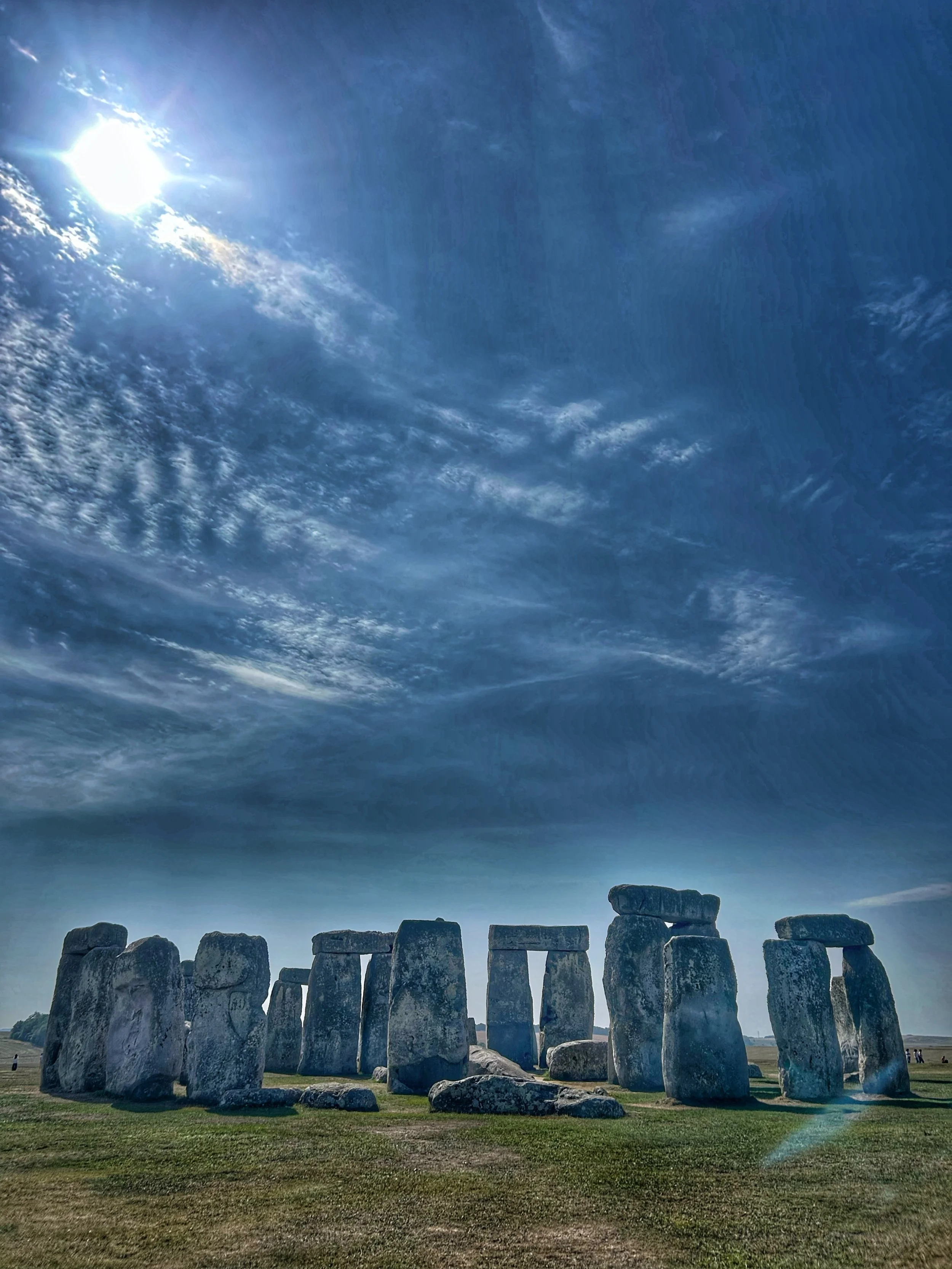
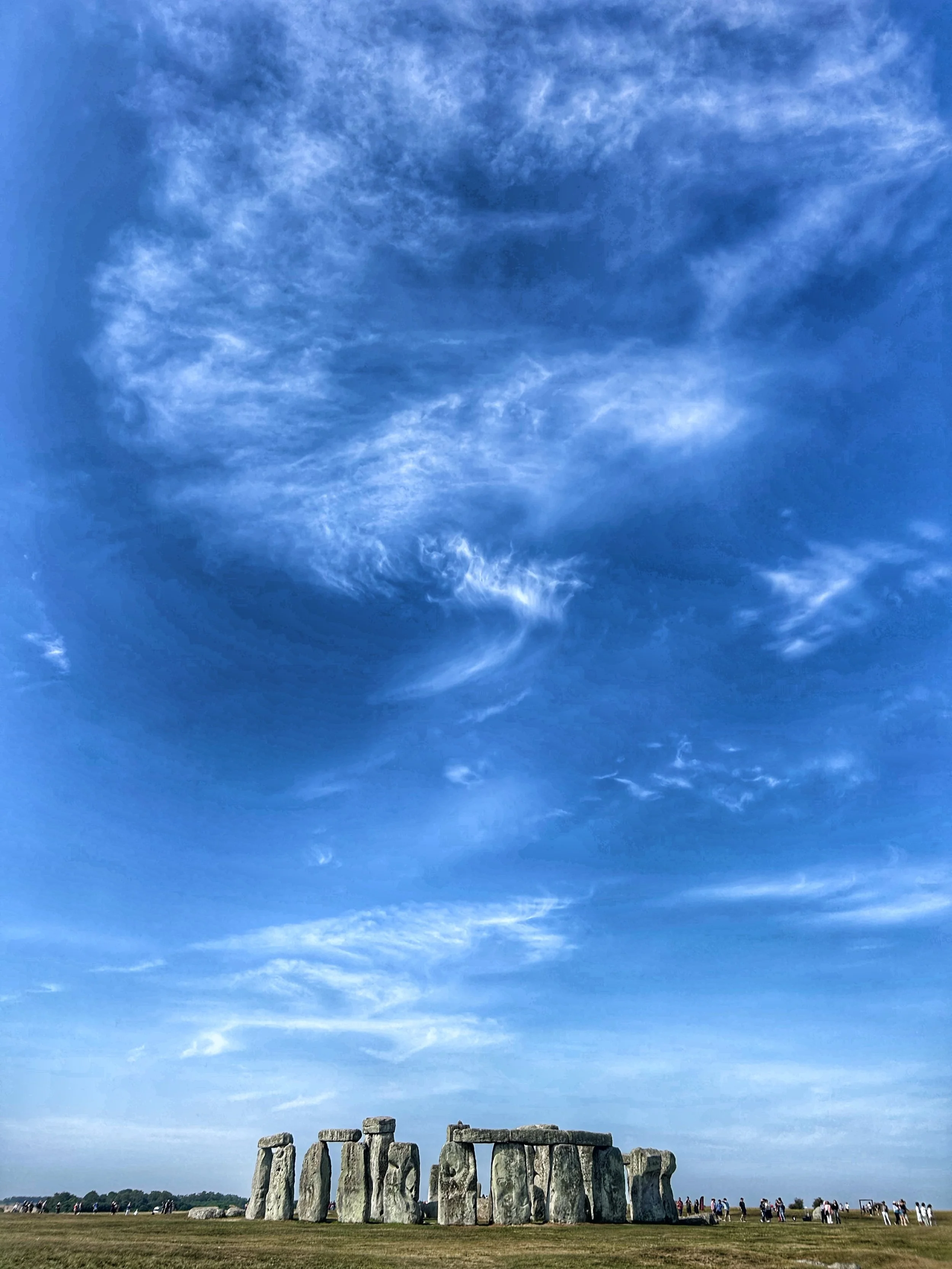
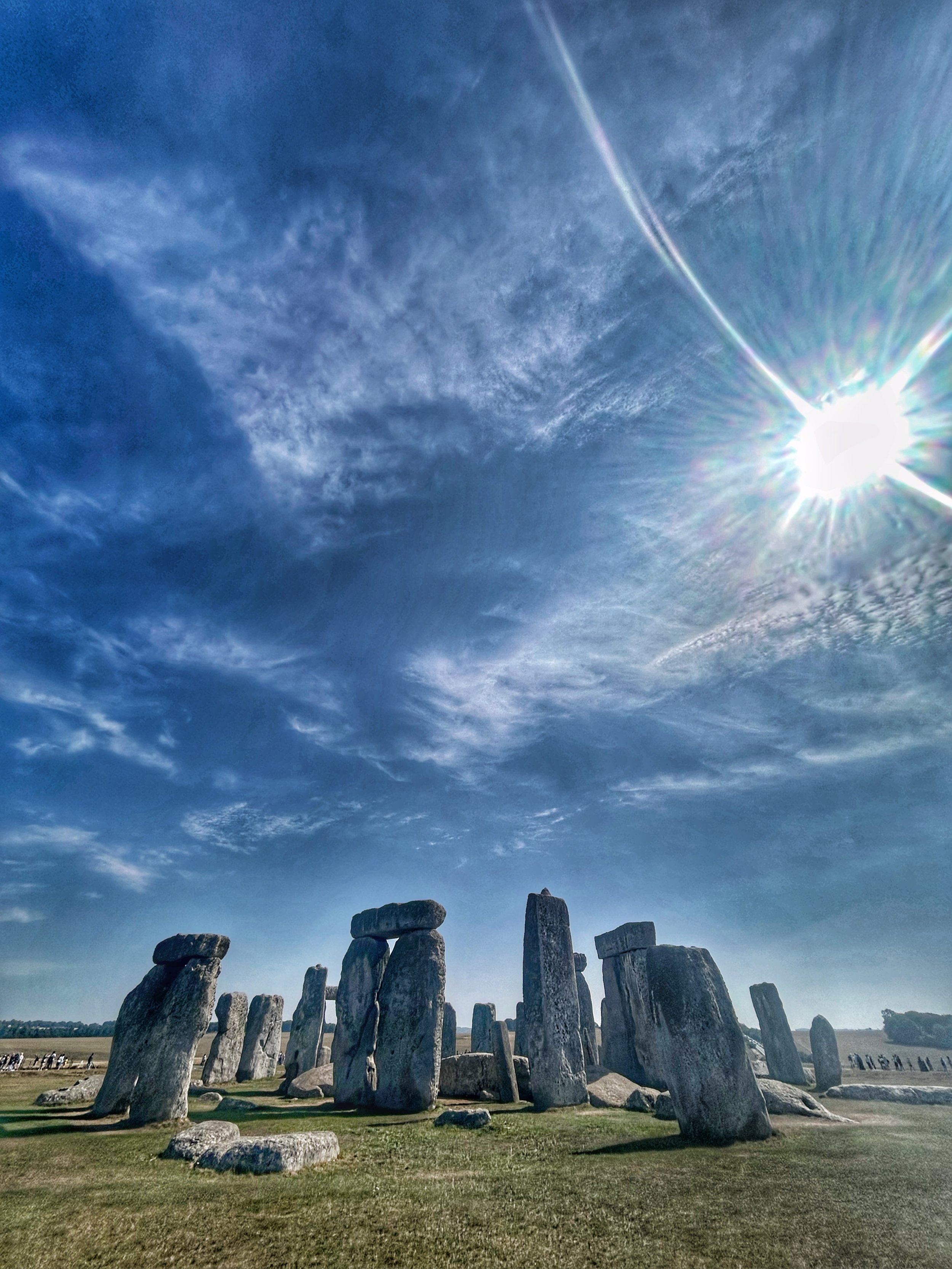
You know how it is—you live twenty minutes away from one of the most famous monuments in the world, but you never actually get around to visiting it. Well, as part of our staycation, we finally made the trip! There’s something special about seeing those massive, ancient stones in person, especially when you know the wild folklore behind them.

The history is steeped in magic, with the most famous story coming from Geoffrey of Monmouth’s History of the Kings of Britain. The legend says the stones were called the "Giants' Dance" and originally stood in Ireland. After a great battle, the British king, Aurelius Ambrosius, wanted to build a monument to honour 460 nobles who had been killed. His wizard, Merlin, suggested bringing the Giants' Dance over because the stones were believed to have magical healing powers. When the nobles, including the future King Uther Pendragon, laughed at him, Merlin explained the stones were set up by giants who had brought them from Africa. An army was sent, but they couldn't budge the stones, so Merlin had to use his magic to transport them to the Salisbury Plain himself!

Speaking of stone circles and their incredible stories, you might remember our chat with storyteller Dawn Nelson back in Episode 18 of the podcast. It’s a topic that’s always fascinated us, and seeing Stonehenge in person really brings all those myths to life.

And for a bit of a cheeky fact, a study last year named Stonehenge one of the most "overrated" tourist attractions in the world! Apparently, the high ticket prices and not being able to get too close to the stones can leave some people feeling a bit underwhelmed. But for me, standing there, knowing all the wyrd history and legends, was anything but overrated.

Have you visited Stonehenge? Do you think it's worth the hype? Let us know your thoughts in the comments!

The Thing About the Thing Is... Sometimes It's a Mural!

A New Mural for the Warminster Thing

A massive shout-out to our listener, Claire Mullin, who tipped us off about something wyrd and wonderful happening in Warminster! She let us know that an incredible new mural has appeared in the town, celebrating its bizarre history with UFOs, so we had to go and check it out.

For those who don't know, back in the mid-1960s, Warminster became a hotspot for UFO sightings. The whole thing kicked off with a mysterious "banging" or "rasping" sound, and it was local journalist Arthur Shuttlewood who first wrote about "The Thing" that was terrorizing the town. After that, the sightings of strange lights, hovering crafts, and inexplicable aerial phenomena just took off, turning Warminster into the UK's capital of high strangeness.

The new mural, created by local artist Paul Boswell, really captures that history. The 20m-long spray-painted artwork, which was funded by a community Facebook group, features flying saucers, strange creatures, and a portrait of Arthur Shuttlewood himself. Paul, who grew up in the area, even mentioned he used to go UFO spotting on Clay Hill as a teenager hoping to be "taken away by aliens!"

And the timing couldn’t be better, because this month there's a UFO conference scheduled in the town to celebrate the 60th anniversary of the first sightings. The organiser, Stuart Dike, and retired detective and UFO archivist John Hanson were both at the mural unveiling. It’s a chance for local enthusiasts and experts to celebrate Warminster's strange legacy and discuss a mystery that, 60 years on, is still part of the town’s identity.

If you’re a fan of our show, you've got to go and see the mural. It's a fantastic piece of art and a great nod to a classic British enigma.

If you want to hear our full deep dive into the story, you can listen back to Episode 23 where we covered the Warminster Thing in detail.

Have you seen it? Let us know your thoughts in the comments!

Slender Man Update, Alien Probes & Dino-Beavers: A Rundown of AfterWyrd

Hello and welcome to AfterWyrd, the place where Andy and Craig cram all the weirdness they can't fit into the main show. This episode is packed with updates on old cases, bizarre news, and some very strange personal stories.

A Slender Man Update

The episode kicks off with Craig providing an update on the Slender Man stabbing case. Morgan, one of the two teenagers involved, has been approved for a conditional release from a mental hospital. The hosts discuss the public debate surrounding her release, her diagnosis of schizophrenia, and the legal nuances of being found "not guilty by reason of insanity." They also mention the confusion in news articles regarding Morgan's gender transition and the use of pronouns.

Alien Probes and the Dark Forest

Andy then presents a wild news story about a newly discovered interstellar object, 31 Atlas, which some Harvard scientists believe could be an alien probe. The hosts discuss the Dark Forest Hypothesis—the theory that alien civilizations remain silent out of fear of drawing attention from hostile forces. They even connect this to a previous clip from a UFO researcher who warned that governments might fabricate an alien threat.

The Pentagon's Ghostbusters

Next, Craig dives into a new documentary that exposes a shadowy group of US government officials who have been investigating paranormal phenomena for decades. From Project Stargate to the famous Skinwalker Ranch, the story is full of bizarre reports of "dino-beavers," psychic powers, and UFOs. The hosts discuss how this fringe group of "paranormal believers" had gained influence inside the Pentagon and even considered detonating a nuclear bomb to attract UFOs.

A Stranger Under the Bed

The episode wraps up with a terrifying, real-life story of a woman who found a man hiding under her hotel bed in Tokyo. The hosts question how the police and hotel staff handled the incident and then share a personal anecdote about Craig's own late-night encounter with a stranger.

The Big Grey Man of Ben Macdui: An In-Depth Look at Britain's Most Mysterious Mountain Ghost

Hello and welcome to Wyrd Wessex! In our latest episode, we took a deep dive into one of the most chilling and perplexing mysteries in all of the British Isles: the legend of the Big Grey Man of Ben Macdui. This isn't your typical ghost story. It’s a decades-old enigma haunting Scotland’s second-highest peak, where something unseen has been terrifying some of the world's most experienced mountaineers.

The Most Famous Encounter

The story's roots go back to 1891 with the renowned Professor J. Norman Collie. As a distinguished chemist, a pioneering mountaineer, and a Fellow of the Royal Society, Collie was not a man prone to flights of fancy. Yet, while descending the mountain in a dense mist, he heard something unnerving: giant footsteps following him, taking strides three or four times the length of his own. Overcome with an indescribable terror, he ran blindly for miles, later confessing that something was "very queer about the top of Ben Macdui" and he would never return.

A Mountain of Unsettling Stories

Collie's account was far from an isolated incident. Over the years, countless other climbers have reported similar, and sometimes even stranger, experiences:

  • The "Psychic" Encounter: Mountaineer Peter Densham twice had a deep sense of dread on the mountain, once feeling a cold pressure on his neck and a force pushing him toward a deadly cliff.

  • The Brown Creature: A friend of climber Richard Frere, attempting to spend a night alone on the summit, was terrorized by an intense sense of presence before witnessing a massive, brown, swaggering creature he estimated to be over 20 feet tall.

  • The Demonic Sighting: A respected lawyer and veteran mountaineer, George Duncan, was so shaken by his sighting of a devil-like figure in a black robe on the mountain's slopes that he felt a cold shiver run down his spine, an experience he never had before or since.

Beyond the Grey Man

The mystery isn't limited to just a spectral figure. The mountain seems to be a nexus for all sorts of unusual phenomena.

  • Ghostly Music and Voices: Many have reported hearing beautiful, swelling pipe music, baritone voices singing, and even a "spectral orchestra" in the silent, misty conditions.

  • Time Slip Visions: Mountaineer Frank S. Smythe had a vivid and terrifying vision of a massacre on the mountain, an event he later learned was historically plausible for the area.

  • Benevolent Beings: Not all encounters were frightening. Mahayana Buddhist Captain Sir Hugh Rankin and his wife saw and conversed with a tall, peaceful figure they instantly recognized as a Bodhisattva, a perfected being of their faith.

Explaining the Unexplained

So, what is the Big Grey Man of Ben Macdui? The logical brain offers a few explanations:

  • Brocken Spectre: An optical illusion where a person's shadow is magnified and distorted by mist.

  • Infrasound: Low-frequency sound waves generated by wind and geology that can cause feelings of anxiety, dread, and a sense of presence.

  • Hallucination: The extreme isolation, fatigue, and cold can certainly play tricks on the mind.

But as we highlighted in the episode, the most compelling part of this legend is that these experiences are reported almost exclusively on Ben Macdui by some of the most seasoned and rational climbers in the world. Whatever the cause—be it scientific, paranormal, or something completely unknown—it's clear that this mountain holds a secret that continues to fascinate and terrify to this day.

For more deep dives into the weird and wonderful, be sure to check out our latest episode and follow us on our socials! You can also find our show on Substack at weirdwessex.co.uk to get notifications about new content.

Stay Wyrd!

AfterWyrd: Ozzy's Legacy, Loft Phroggers & Fake Sperm Races!

Hello and welcome to AfterWyrd, the show where we dive into the strange, the mysterious, and the downright bizarre stuff we couldn't squeeze into our regular episodes. This time, we're talking about a rock legend, a terrifying home invasion, and a few other head-scratchers.

Ozzy Osbourne's Legacy The episode kicks off with a tribute to the Prince of Darkness, Ozzy Osbourne, who recently passed away. The hosts discuss his massive impact on music and his role in popularizing the occult and paranormal in rock. They also touch on the personal connection he had to many fans and his incredible final performance.

The "Unicorn" Skull Next, they discuss a peculiar news story about a man who reportedly found a unicorn skull in Cornwall and traded it for "unlimited beer" at a pub. The hosts muse on the authenticity of the find and where such a strange artifact should ultimately end up.

The "Frogger" in the Loft The podcast takes a creepy turn with a chilling story from 2009. A man set up a camera to catch his girlfriend stealing food, only to discover a stranger was secretly living in his loft and creeping around his apartment at night. The hosts react to the genuinely unsettling video footage of the incident.

The Fake Sperm Race The show wraps up with a story about a "world's first sperm race" that turned out to be a fake. The event, which drew a large online audience, used pre-recorded footage and CGI to simulate a race that had already taken place, leaving the hosts in a state of disbelief and amusement.

A Conversation with Maxim Furek: Demonic Hauntings, Psychic Sasquatch, and UFOs

We had an incredible, wide-ranging conversation with author and paranormal researcher Maxim Furek, covering everything from demonic entities to the mysterious nature of Bigfoot.

The Smurl Haunting and Annabelle's Power

The conversation started with Maxim's book, The Smurl Haunting: The True Story of the Smurl Family's Battle with a Demonic Entity. He explained the harrowing experience of the Smurl family and how the famous paranormal investigators Ed and Lorraine Warren became involved. Maxim also shared his personal experience with the Annabelle doll, which he saw on display, and brought up the chilling visions and hauntings that followed the Shepton mining disaster.

A New Theory for Bigfoot and UFOs

The discussion took a fascinating turn when we got to Bigfoot. Maxim introduced the interdimensional hypothesis, a theory from researcher Jacques Vallée. Vallée argues that the idea of aliens traveling for light-years is outdated. Instead, he believes UFOs and cryptids, like Bigfoot, use wormholes to fold space-time, allowing them to travel through dimensions. This theory provides a logical explanation for the strange connection between UFOs and Bigfoot sightings, especially in a place called Chestnut Ridge, Pennsylvania.

The Best Evidence for Bigfoot's Existence

The conversation wouldn't be complete without discussing the evidence. Maxim highlighted the two most authentic pieces of proof: the Malacca ape film and the famous Patterson-Gimlin film. He told the amazing story of British paleontologist John Napier, who initially called the Patterson-Gimlin film a hoax. However, after the discovery of the "Lucy" fossil in 1974, which had the body of an ape and the ability to walk upright, Napier changed his mind, stating that the film was authentic.

The hosts also brought up their own research into Leif Erikson's accounts of "skrælings" from the Viking era, which have descriptions eerily similar to Bigfoot. Maxim confirmed this link, noting that while "Bigfoot" is a modern name, the legend of Sasquatch has been a part of indigenous cultures for thousands of years.

A Final Message

Finally, we talked about why Bigfoot is so popular today. Maxim explained that it's become a massive "cottage industry" with documentaries, books, and expos, all of which keep the legend alive and well. He also gave his own take on what Bigfoot could be, weighing the popular theory that it's the extinct ape Gigantopithecus against the interdimensional hypothesis. He concluded that the lack of a body points toward the interdimensional theory.

The conversation ended with a powerful message about conservation. Maxim hopes that our fascination with Bigfoot, which some indigenous cultures believe is a protector of the environment, will inspire us to be better stewards of our planet.

Is Bigfoot Hiding in Another Dimension? A Conversation with Maxim Furek

Most people think of Bigfoot as a fuzzy, ape-like creature stomping around the Pacific Northwest. But what if the truth is far weirder? That's the question we explored with author Maxim Furek, who joined us to discuss his book, Lost Tribes of Bigfoot. Our conversation took us on a wild ride, from infamous hoaxes to psychic miners and everything in between.

Beyond the Hoaxes

Maxim is passionate about separating fact from fiction. He started our chat by calling out some of the most famous hoaxes in paranormal history, like the Piltdown Man and the Minnesota Iceman. He explained that these elaborate fakes did serious damage to the credibility of serious paranormal research, making it harder for people to believe genuine sightings.

This is where Furek's book comes in—it's an attempt to clear the air and focus on the truly compelling evidence, no matter how strange it seems.

Bigfoot and the Interdimensional Theory

So, if Bigfoot isn't just an ape, what could it be?

Maxim is a big believer in the interdimensional theory. This idea suggests that Bigfoot might not be a physical creature at all, but a being that can move between different dimensions. This would explain why it's so good at disappearing, and why we've never found a body. This theory gets even more interesting when you consider the number of times Bigfoot sightings have been reported alongside UFOs and strange orbs of light. The Chestnut Ridge area in Western Pennsylvania, for example, is a hotspot for all three!

The Evidence That Makes You Wonder

Maxim highlighted some of the most intriguing pieces of evidence out there. Of course, we talked about the famous Patterson-Gimlin film, the 1967 footage that many still believe is the best proof we have. But the most chilling story he shared was the Albert Ostman abduction. In 1924, this trapper claimed he was kidnapped by a family of Sasquatch and held for a week. What makes his story so credible, Furek says, is that he didn't make up any of the over-the-top details we often see in modern stories.

A Few Detours into the Weird

Our conversation wasn't all about Bigfoot, though. We took a couple of fascinating detours into other paranormal topics. Maxim brought up the Sheppton mining incident from 1963, where two trapped miners claimed they had visions of humanoid figures and the recently deceased Pope John XXIII. We also touched on the history of the Annabelle doll and how that one item has spawned a massive horror franchise.

The True Message of Bigfoot

For Maxim, the Bigfoot legend has a much deeper meaning. He believes the creature is a protector of the environment. He says that Native American coastal tribes have known this for centuries. Ultimately, he hopes that the fascination with Sasquatch will inspire people to become better stewards of the environment. So, the next time you hear a story about a wildman in the woods, maybe it's not just a creature—maybe it's a reminder to take better care of our planet.

Wyrd News from the AfterWyrd: From Soviet Spy Radios to Cursed Football Teams

We live in a strange world, and every day brings a new headline that makes you scratch your head and ask, "Is that for real?" On our podcast, we dive into the most bizarre news stories, exploring the strange, the unusual, and the downright inexplicable. This week's batch was no exception.

Here are three of the most mind-bending news stories we discussed, proving once again that reality is often stranger than fiction.

1. The Soviet Doomsday Radio That Woke Up for Trump

Imagine a radio station that has been broadcasting a continuous, monotonous buzz for decades, a chilling relic of the Cold War. This is the reality of the mysterious Russian radio station, known variously as the Buzzer, Deadhand Radio, or Judgment Day Radio. Its purpose remains classified, but it is widely believed to be part of a military system tied to Russia's nuclear arsenal.

The weirdness begins when the buzzing stops. On rare occasions, it's replaced by a series of cryptic messages—not unlike a coded broadcast for a spy network. One of the most recent incidents occurred during a phone call between Russian President Putin and Donald Trump. Was it a coincidence, or a sign that the old spy games are alive and well? We'll let you decide.

2. When Football Meets Feudal Superstition

The world of football is no stranger to superstition, but a recent story from China takes it to a new level. A third-tier football club was fined a whopping 30,000 yuan (around US$4,000) for channelling evil spirits. The team was caught placing Taoist paper talismans in their opponent’s changing room before a match. These paper charms were believed to use spirit energy to bring misfortune to the rival team.

What’s truly baffling is that this isn't an isolated incident. In 2017, another Chinese club, desperate to avoid relegation, invited 15 Taoist priests to perform rituals on the field before a crucial game. They went on to win, in what was only their second victory of the season, and ultimately avoided relegation. Whether it's a matter of genuine belief or just an attempt to mess with the opponents' heads, these stories prove that in some parts of the world, a match isn't just about skill—it's about the spirits on your side.

3. Scotland’s Seagull Crisis

And finally, for a story that sounds like a parody, we turn to Scotland. Members of the Scottish Parliament are calling for a nationwide "seagull summit" to tackle the growing problem of aggressive gulls. While it might sound like a joke, the situation is apparently quite serious. One politician reported that aggressive seagulls had attacked seven children in just one month, leaving a young girl with gashes on her scalp.

The birds are now considered a genuine threat, with some warning that people could lose their lives. It's a surreal situation to imagine politicians holding a formal summit to address a seagull problem, but it serves as a bizarre reminder that sometimes the most mundane parts of our environment can turn into a source of unexpected chaos.

The world is full of these oddities, and we love uncovering them. If you enjoy diving into the weird side of life, stay tuned for our next update.

Weird News: Unexplained Phenomena in Modern Britain

In a world filled with constant information and technological advancement, it is easy to assume that the weird and the inexplicable belong to a bygone era. Yet, from ghostly encounters on our roads to unnerving interactions with our smart home devices, unexplained phenomena continue to be reported with startling frequency, reminding us that the veil between the known and the unknown remains thin.

The Haunted Smart Speaker?

A new and particularly modern form of paranormal activity has been circulating online: children reacting with profound fear to voice-activated devices like Amazon's Alexa and Google's Home. In numerous video compilations, toddlers and young children are seen becoming terrified, crying, or cowering at the mention of the devices' wake words.

The phenomenon has sparked debate and speculation. Some theorists suggest the cause is a simple primitive fear of a disembodied voice speaking from an unseen source, a reaction to something that defies a child's understanding of the physical world. However, a darker theory posits that these devices may be emitting a high-frequency noise or radio wave that only animals and young children can perceive, triggering a visceral, unexplained fear. Whether it is a psychological quirk or something more unsettling, the unnerving videos serve as a modern-day ghost story playing out in our living rooms.

The Ghost That Screamed

One of the most compelling pieces of photographic evidence for the existence of a soul may have been captured in the most tragic of circumstances. In 1984, following a fatal car accident in Minnesota, a police photo taken with a film camera reportedly captured what appeared to be the soul of a victim leaving their body.

The image, now dubbed "The Ghost That Screamed," shows a distinct, screaming face hovering above the crashed car. The victim, 16-year-old John Boulware, had been pronounced dead at the scene. Brian Cole, the officer who took the photo, has stated that the figure appeared to be in agony and shared a "distinctive profile" that resembled the deceased teenager. Sceptics have attributed the image to a double exposure or light fragments, but a mystic has recently claimed it is definitive proof of "a soul in transition." The photo remains a haunting mystery, challenging our understanding of what happens at the moment of death.

Britain's Supernatural Hotspots

For centuries, Britain has been a nexus for paranormal activity, and a recent study suggests this is still the case. By mapping paranormal sightings, UFO hotspots, and crop circles across the country, the study ranked Britain’s most supernaturally active areas. Wiltshire came a close second, with Argyll and Bute in Scotland taking the top spot. But coming in third place, and holding its own, was Dorset.

The study highlights some of the county's more compelling reports. In one case from Beaminster, a farmer claimed to have encountered a woman in a white dress with bright pink eyes. In another, two train drivers reported striking a shadowy figure in the Binkham railway tunnel. While some of these sightings might be attributed to misidentification or tricks of the light, the sheer volume of paranormal activity—documented for generations—shows that many in the UK still believe there is more to the world than what can be seen.

A Night in the Ruins: The Enduring Weirdness of Corfe Castle

Towering over the picturesque Dorset village that shares its name, Corfe Castle is a breathtaking relic of history. But beyond its stunning beauty and strategic importance lies a dark and unsettling legacy. This is not just a pile of ancient stones; it is a time capsule of a thousand years of brutal, bloody, and bizarre history.

The weirdness of Corfe doesn't stop at the castle walls. Tales of the paranormal are woven into the very fabric of the village itself, where buildings have seen centuries of life and often, unfortunate ends. The Greyhound Inn, located in the shadow of the castle, is one such place. Landlords and regulars have reported the distinct feeling of a presence, sometimes accompanied by unexplained noises, objects falling, and faint whispers. Given its location, the pub would have been right in the thick of the action during the sieges, filled with villagers and soldiers drinking their last pints as the castle was smashed to pieces above them.

Even the Corfe Castle Model Village and Tea Room, which once served as part of the old rectory, has its share of unsettling activity. Reports speak of a dark, shadowy figure seen by staff when closing up at night, an intense coldness, and a sense of being watched. There are also accounts of objects moving on their own. Anecdotal stories even suggest brief, residual echoes of figures resembling Roman soldiers—a "catering nightmare," one might say.

The castle’s own history is steeped in violence and betrayal, a story that begins long before the impressive stone walls were erected. Archaeologists have found post holes from a 9th-century Saxon royal hall, a testament to its early importance, as it was supposedly a hunting lodge for King Alfred the Great. After the Norman conquest, a new, imposing stone hall was built on William the Conqueror’s direct orders, setting the stage for centuries of conflict.

The first major siege came during the chaotic period of English history known as the Anarchy. After Henry I died without a male heir, his cousin Stephen of Blois usurped the throne from Henry's daughter, Matilda. Stephen laid siege to Corfe Castle, which had sided with Matilda, and even built a massive, wooden siege tower to try and take the fortress. But despite weeks of trying, the castle held firm, earning its reputation as an unyielding stronghold.

Later, under King John, the castle became a truly terrifying royal prison. While he loved staying here for hunting, John used it as a secure base for his prisoners, including his niece, Eleanor of Brittany. But his hospitality was far from kind. It is said that he ordered 22 French knights to be starved to death in one of the dungeons. His particular brand of cruelty found a fitting home here.

This traumatic past has left a palpable mark. One of the most chilling concepts associated with the castle is the oubliette, a form of dungeon designed not for imprisonment, but to utterly forget a person. The word comes from the French for "to forget," and that was the entire point. With no door and only a single opening in the ceiling, a person lowered inside was simply erased from the world, left to face a uniquely terrifying form of psychological torture.

The castle’s most famous ghost is said to be that of King Edward the Martyr, a 15-year-old boy who was murdered here in 978 AD. As he was dismounting his horse, he was ambushed and stabbed, and his body was dragged before he bled out. His spirit, still lost and disoriented by this violent end, is reportedly seen as a pale, young figure, leaving behind cold spots and a profound sense of sadness. His ghost is often spotted around gateways and ruined halls, as if reliving his final moments.

Another well-known spectre is the White Lady, widely believed to be the spirit of the defiant Lady Mary Banks. She famously defended the castle against Cromwell's army for over two years, even reportedly rolling stones and hot embers down on her attackers. Her heroic stand ultimately ended in betrayal, and her spirit is said to still patrol the ramparts in a flowing white gown, a defiant and profoundly loyal figure. Her presence is sometimes accompanied by the faint scent of lavender or potpourri, and she is said to project a powerful sense of melancholy and protective watchfulness.

Beyond these specific apparitions, there are general reports of phantom soldiers and guards. Visitors often hear the faint sounds of marching footsteps and the distant clank of armour. It’s as if the castle itself is playing back echoes of its violent past. From the ghost of a murdered king to the unwavering spirit of a betrayed lady, the bizarre atmosphere of this iconic ruin serves as a powerful reminder of the dramatic and often brutal events that shaped Britain's past.

The Shadow of the Cecil: Unravelling the Tragic Mystery of Elisa Lam

The Cecil Hotel, now known as Stay on Main, is a place that feels like it exists on the edge of reality. A grand building erected in 1924 during the roaring twenties, its early promise of glamour and elegance was short-lived. The Great Depression cast a long, dark shadow, and the hotel, situated near Skid Row in downtown Los Angeles, became a refuge for society’s forgotten souls.

With its decline, a sinister reputation began to grow. The Cecil became a crucible of human misery, a place that seemed to attract tragedy like a moth to a flame.

A Hotel's Dark Legacy

The Cecil Hotel's dark history is not merely a collection of rumours; it is a litany of despair. In 1947, Elizabeth Short, infamously known as the Black Dahlia, was rumoured to have been seen at the hotel's bar shortly before her gruesome, unsolved murder. In the 1960s, the unsolved murder of Goldie Osgood occurred within its walls.

The hotel's most notorious association, however, is with two serial killers. Richard Ramirez, the "Night Stalker," reportedly used the Cecil as a temporary base during his killing spree in the 1980s. A decade later, Austrian serial killer Jack Unterweger also stayed there while suspected of committing several murders. Adding to this disturbing history is the tragic case of Dorothy Purcell, a young mother who, in a state of disorientation, threw her newborn baby out of her hotel window in 1944.

Beyond the documented crimes and tragedies, the Cecil Hotel has long been whispered to be one of the most haunted places in Los Angeles. Guests and staff have reported apparitions, unexplained noises, and an overwhelming sense of unease. It is within this grim setting that the tragic story of Elisa Lam unfolds.

The Final Journey of Elisa Lam

Elisa Lam, a 21-year-old student from British Columbia, embarked on a solo trip to California in early 2013. A keen blogger, she had openly shared her struggles with mental illness, describing herself as "haunted by the idea that you're wasting your life." On 26th January 2013, she checked into the Cecil Hotel.

Initially, she was assigned a shared room, but her roommate soon complained of her "odd behaviours," and Elisa was moved to a private room. On 31st January, the day she was scheduled to check out, she failed to contact her family. Her concerned parents alerted the LA Police Department, and a search began.

The case gained widespread attention after the LAPD released a surveillance video of Elisa in one of the hotel's elevators. The footage is chillingly bizarre. Elisa’s movements are erratic; she appears to press every button on the panel, peers frantically into the hallway as if fleeing an unseen presence, and at one point, she steps out of the lift as the doors inexplicably remain open. The video’s release sparked immediate debate, with many pointing out that the timestamp had been obscured and parts of the footage appeared to have been slowed down, fuelling suspicions of a cover-up.

A Grim Discovery and Lingering Questions

A few weeks later, hotel guests began complaining of low water pressure and an unusual taste and colour in their water. A hotel maintenance worker, Santiago Lopez, was sent to the rooftop to inspect the water tanks. It was there, floating face-up in one of the four huge tanks, that he made the horrific discovery of Elisa Lam’s body.

The Los Angeles County Department of Medical Examiner-Coroner ruled Elisa’s death an accidental drowning, with bipolar disorder being a significant contributing factor. But this official conclusion left many questions unanswered. How did Elisa get onto the hotel's locked and alarmed rooftop? More puzzlingly, how did she climb into the tank, which was propped up on concrete blocks and protected by a heavy lid? The mystery of her last moments remains, casting a long shadow over the official explanation.

To this day, the case of Elisa Lam remains a haunting modern tragedy. It is a story where the lines between mental illness, foul play, and the truly uncanny seem to blur. Whether Elisa’s death was a tragic accident or a product of something far more sinister, the Cecil Hotel stands as a silent witness to a mystery that continues to defy rational explanation.

Demons in Leeds & Petrified Soldiers: The Week in Weird News

From chilling discoveries at sea to bizarre rituals on British soil and a Cold War mystery with an alien twist, this week has delivered a fresh batch of stories that remind us that the truth is often stranger than fiction.

A Ghost Ship, a Cutlass, and a Grisly Secret

In a truly chilling update to the maritime world, an event from January 1989 has resurfaced. A whaling ship north of the Agasawa Islands nearly collided with a drifting, unmanned fishing vessel. Upon boarding, the crew made a terrifying discovery: the ship's helmsman was a partially decomposed corpse, lashed to the wheel, with a cutlass plunged into his ribs. A single, ominous word, "depths," was found written in blood on the scabbard, while the name "Bully Bates" was etched onto the blade. With no other crew members to be found, the mystery remains unsolved, leaving investigators to ponder whether the victim or the murderer was the owner of the grim epitaph.

Black Magic and Hissing in Leeds

A court hearing in Leeds, England, recently brought to light a bizarre and unsettling incident. First responders were called to a house fire where they found peculiar patterns drawn on the floor with a white powder. The resident, a man named Amir Miraki, allegedly "hissed" at the firefighters and warned them not to touch bottles on the floor, claiming they were "black magic." He declared that he had captured demons, was possessed, and that his life was over. Although a court cited a mental health episode for his actions, the incident, echoed by the man’s neighbours, remains a disturbing tale of a ritual gone wrong.

Ozzy Osbourne's Strange Legacy

In a decidedly strange move, legendary rocker Ozzy Osbourne has teamed up with a drinks company to sell his own DNA to fans. The company released 10 limited-edition iced tea cans, each containing a trace of Ozzy's saliva and a promotional trailer urging fans to "clone me, you bastards." The product, fittingly named "Infinite Ozzy," raises the question of legacy and immortality in the most bizarre way possible.

The Cold War's Alien Secret

A recently unearthed CIA memo has revived one of the Cold War's most incredible claims. The report, said to be based on a KGB file from 1991, details a purported incident where 23 Soviet soldiers were turned to stone. The report claims the soldiers shot down a UFO near a military base. Five short, large-headed beings emerged from the wreckage, merged into a glowing sphere, and emitted a powerful light. The soldiers who witnessed the event were allegedly petrified, their molecular structures altered to resemble limestone. While its authenticity is fiercely debated, the story adds a fascinating and chilling twist to the history of UFO encounters.

Beyond the Veil: Unravelling the Mysteries of the Bermuda and Dragon's Triangles

For centuries, sailors and pilots have told tales of strange events in the world's most remote places. But few mysteries have captivated the public imagination quite like the ominous legends of the world's "mystery triangles." While the most famous is the Bermuda Triangle, a lesser-known but equally baffling region exists on the other side of the globe: the Dragon's Triangle.

Together, these two areas present an unnerving pattern of disappearances that science alone struggles to explain.

The Bermuda Triangle: Where the Legend Began

The Bermuda Triangle, a vast expanse of the Western Atlantic stretching from Bermuda to southern Florida and Puerto Rico, earned its eerie reputation in the 20th century, but its strangeness was first recorded centuries earlier. Christopher Columbus himself noted bizarre compass readings and a strange "ball of fire" crashing into the sea during his 1492 voyage.

However, the legend was cemented on 5th December 1945, with the disappearance of Flight 19. Five US Navy Avenger torpedo bombers, tough combat-tested machines, simply vanished during a routine training mission in ideal weather. Their commander, an experienced pilot, radioed in a state of utter confusion: "We don't know which way is west. Everything is wrong. Strange. We can't be sure of any direction." Moments later, the tower heard a student pilot confirm, "Both my compasses are out." All five planes were lost, and a rescue plane sent to find them vanished as well.

This pattern of disappearing aircraft was mirrored by a long history of maritime vanishings. Ships were found completely abandoned, their crews gone but their lifeboats in place. The American schooner Ellen Austin was found with its crew gone, and a new "prize crew" put aboard to sail it to port. Shortly after, the ships were separated in a storm, and when the Ellen Austin was found again, the second crew had vanished too. The most famous naval loss, the USS Cyclops, disappeared in 1918 with over 300 men, leaving no trace. The last radio message from a Japanese freighter in 1924, "Danger like a dagger now. Come quickly. We cannot escape," perfectly encapsulates the terror of these inexplicable events.

The Dragon's Triangle: The Sea of the Devil

On the other side of the world, a similarly dangerous stretch of ocean is known to the Japanese as "Ma no Umi," or the "Sea of the Devil." Ancient Chinese legends dating back to 900 BC speak of a dragon's palace beneath a small island, where strange noises and lights were seen and ships were pulled to their doom.

This ancient folklore has a modern parallel. Following World War II, the disappearances in this area of the Pacific resumed with renewed ferocity. Two Japanese research vessels, the Hayomaru No. 5 and the Kuroshio Maru No. 3, were sent to investigate the phenomena and vanished without a trace, becoming part of the very mystery they were sent to solve. One of the most chilling accounts came from a Japanese pilot during the war, who radioed a final message before his plane disappeared: "Something is happening in the sky. The sky is opening up."

Seeking an Explanation

For both triangles, experts have proposed a range of theories, from the scientifically plausible to the truly weird.

  • Scientific Explanations: Both regions are subject to extreme natural phenomena. The Dragon's Triangle sits on the Pacific Ring of Fire, a hotbed of volcanic and seismic activity. One major theory suggests that underwater volcanoes and seismic shifts can destabilise frozen methane hydrates on the seabed, causing massive bubbles of gas to erupt to the surface. A ship caught in one of these bubbles would instantly lose buoyancy and sink without a trace.

  • Extreme Weather: Both areas are notorious for sudden, violent storms and massive rogue waves. The "divine winds" that saved Japan from Kublai Khan's invasion fleet were likely devastating typhoons, a common occurrence in the Dragon's Triangle. A sudden, unexpected storm could easily swallow a ship whole.

  • The Vile Vortices: For the truly unexplainable, there's the theory of Ivan T. Sanderson. He proposed that both the Bermuda and Dragon's Triangles are "Vile Vortices," specific areas on the globe where powerful electromagnetic and gravitational anomalies are concentrated. These vortices could cause instruments to fail and even warp the perception of pilots and sailors, explaining the profound disorientation reported by the crew of Flight 19.

  • Interdimensional Portals: Other theories suggest that the intense energies in these regions can tear the fabric of space-time, pulling ships and planes into another dimension or a different point in time. This would explain why no wreckage is ever found.

Whether these vanishings are a product of extreme natural forces or something far more bizarre, the fact remains that two distinct areas on opposite sides of the world share an uncanny history of unexplained disappearances. The Bermuda and Dragon's Triangles continue to hold their secrets, reminding us that there are still mysteries in our world that defy all logic.