
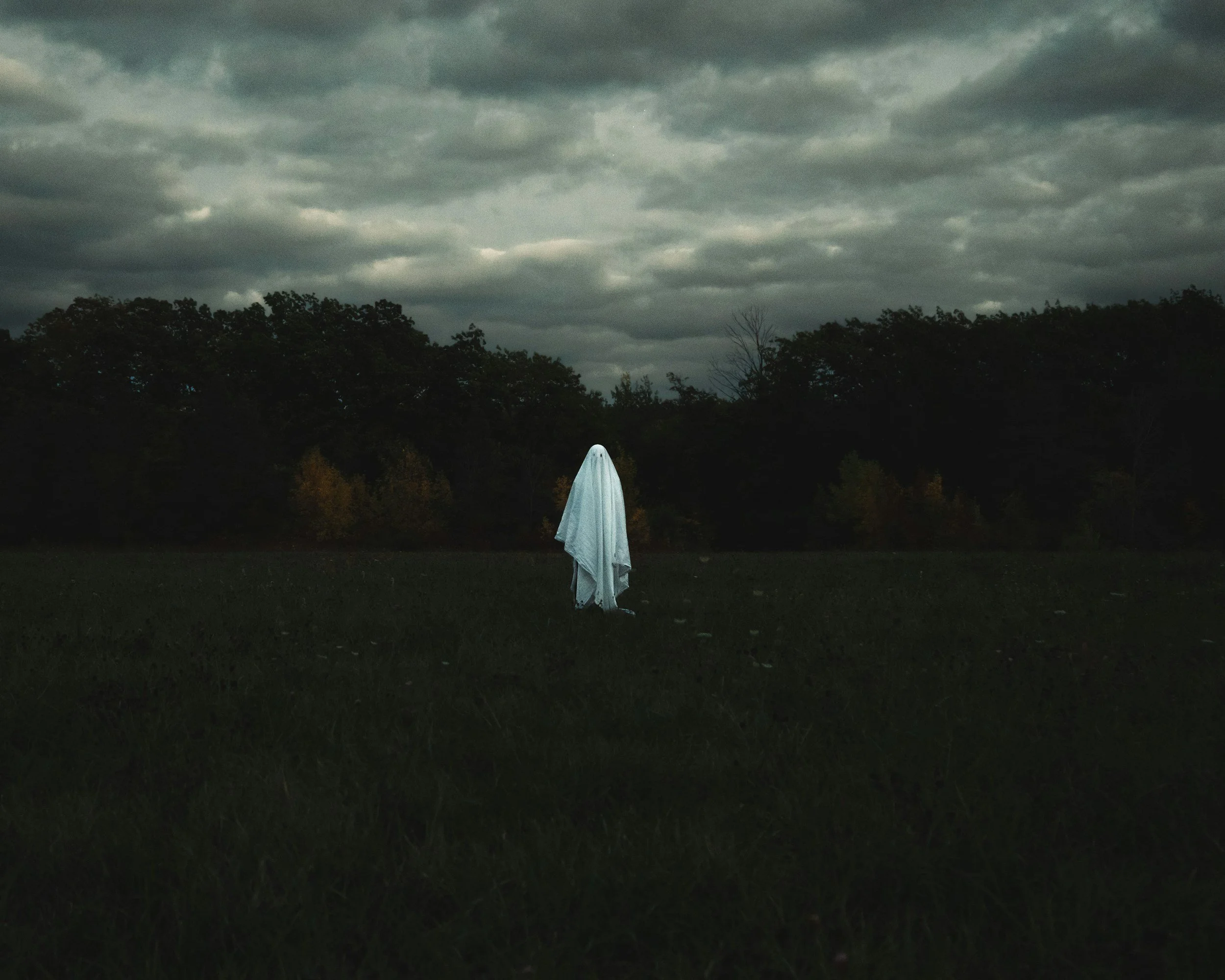
In the depths of winter at the end of 1803, the quiet village of Hammersmith—then an isolated stretch along the River Thames on the outskirts of London—was gripped by utter, contagious panic. Its unlit lanes and ancient churchyard became the stage for a haunting that ended not with a spiritual cleansing, but with a landmark murder trial.
This is the tale of the Hammersmith Ghost.
The Spectre of Black Lion Lane
The terror began with whispers. Local lore suggested the phantom was the unquiet soul of a man who had taken his own life the previous year—the worst kind of death in those days. Suicide victims were barred from consecrated ground, often buried at a crossroads with a stake through the heart, ensuring their soul could never find rest.
The villagers were certain this ghost was compelled to haunt the very borders of the churchyard, with many reporting the horrifying sight of a man with a cut throat.
The sightings, however, were wildly inconsistent, fuelling the hysteria:
The Inconsistent Phantom: The apparition was described by some as being very tall and dressed entirely in white, while others claimed it wore a sinister calfskin garment with horns and large glass eyes.
The Unsettling Details: Witnesses swore the ghost’s eyes glowed like a glow-worm and that it occasionally breathed fire and smoke.
The panic became so extreme that people were too scared to venture out after dusk.
The Physical Assault and The Escalation
This was more than just a fleeting shadow; the phantom had a schedule, often appearing as the church clock struck one in the morning near Black Lion Lane. In one famous instance, a coachman, Mr. Russell, was so frightened that he abandoned his team and carriage full of passengers in the dark.
Worse were the reports of physical assault, which truly escalated the terror into a matter of public safety. The chilling rumours included two women—one elderly and the other pregnant—who were seized by the ghost on separate occasions near the churchyard. The popular, if exaggerated, tale was that they were so frightened they both died from shock a few days afterwards.
With London lacking an organised police force, several citizens formed armed patrols in the hope of apprehending the terrifying spectre. The atmosphere was boiling with fear, suspicion, and vigilantism.
The Tragic Case of Thomas Millwood
Many, however, suspected a human hoaxer. A brewer's servant, Thomas Groom, testified that something rose from behind a tombstone and seized him by the throat, feeling like something soft, "like a great coat." Another night watchman even claimed he saw the supposed ghost discard a white sheet before running off.
The tension reached a catastrophic breaking point on the night of 3rd January 1804.
Francis Smith, a 29-year-old Excise Officer who was part of the armed patrols, encountered a figure near Black Lion Lane—a terrifying, bone-white shape moving in the gloom. Believing he was staring at the angry, cut-throated phantom, Smith levelled his shotgun, a "fowling piece," and shouted a desperate challenge:
"Damn you; who are you and what are you? Damn you, I'll shoot you!"
Smith instantly fired a blast of small lead shot, hitting the figure in the jaw and neck.
The "ghost" was not a phantom at all, but a young bricklayer, Thomas Millwood, aged just twenty-two.
The Trial and the Irony
The full, brutal irony of the situation was revealed at the trial. Thomas's wife, Mrs. Fulbrooke, testified that she had desperately warned her husband because he had already been mistaken for the ghost due to his white clothes.
"I begged of him to change his dress; Thomas, says I, as there is a piece of work about the ghost, and your cloaths [sic] look white, pray do put on your great coat, that you may not run any danger."
Despite the massive public sympathy for Smith, the judge insisted that Smith's genuine belief in the ghost was irrelevant to the charge of murder. The jury was forced to return the only verdict the law allowed: Guilty of Murder. Smith was sentenced to death, though the Crown quickly commuted his sentence to one year's hard labour due to public outcry.
The Scooby Doo Ending
The ultimate irony arrived after the murder trial was concluded. It turned out the spectral, cut-throated phantom was nothing of the sort. The man behind the entire months-long reign of terror stepped forward to confess: old John Graham, an elderly shoemaker.
His motive? To frighten his own apprentice! Graham was simply getting back at the lad for daring to scare Graham's children with ghost stories.
Astonishingly, Graham was never punished for sparking the chaos.
The ambiguity of the "Hammersmith Ghost Murder" still haunted the British courts for two centuries, ultimately shaping modern legal precedents (the 1984 case of R v Williams), which clarified that a mistaken, but genuine, belief that you were preventing a crime could be used as a defence.
A Legacy of Contagious Fear
The fear didn't end with the murder. The scare proved contagious, with subsequent, similar phantom sightings across London—including two schoolboys projecting a headless ghost image near St James’ Park.
The very real terror also paved the way for human predators who attacked women in the lanes, sometimes wearing white garments themselves. Most notably, the incident occurred just before the earliest sightings of Spring-Heeled Jack in 1837, leading many to wonder if the ghost, with its breath of fire and smoke, inspired that later, terrifying legend.
The belief never truly died: in July 1955, the police had to cordon off the churchyard to hold back huge crowds who had gathered to wait for the phantom's supposed return.