
Forget the Jingle Bells: The Terrifying Truth of Krampusnacht
It is the Christmas season, and yet, we must forget the festive cheer. Our journey today takes us into chains, birch switches, and the heart of Alpine folklore, where a creature exists not to reward the good, but to punish the naughty. This creature is the Krampus, a monstrous figure who acts as the dark, primal counterpart to Saint Nicholas.
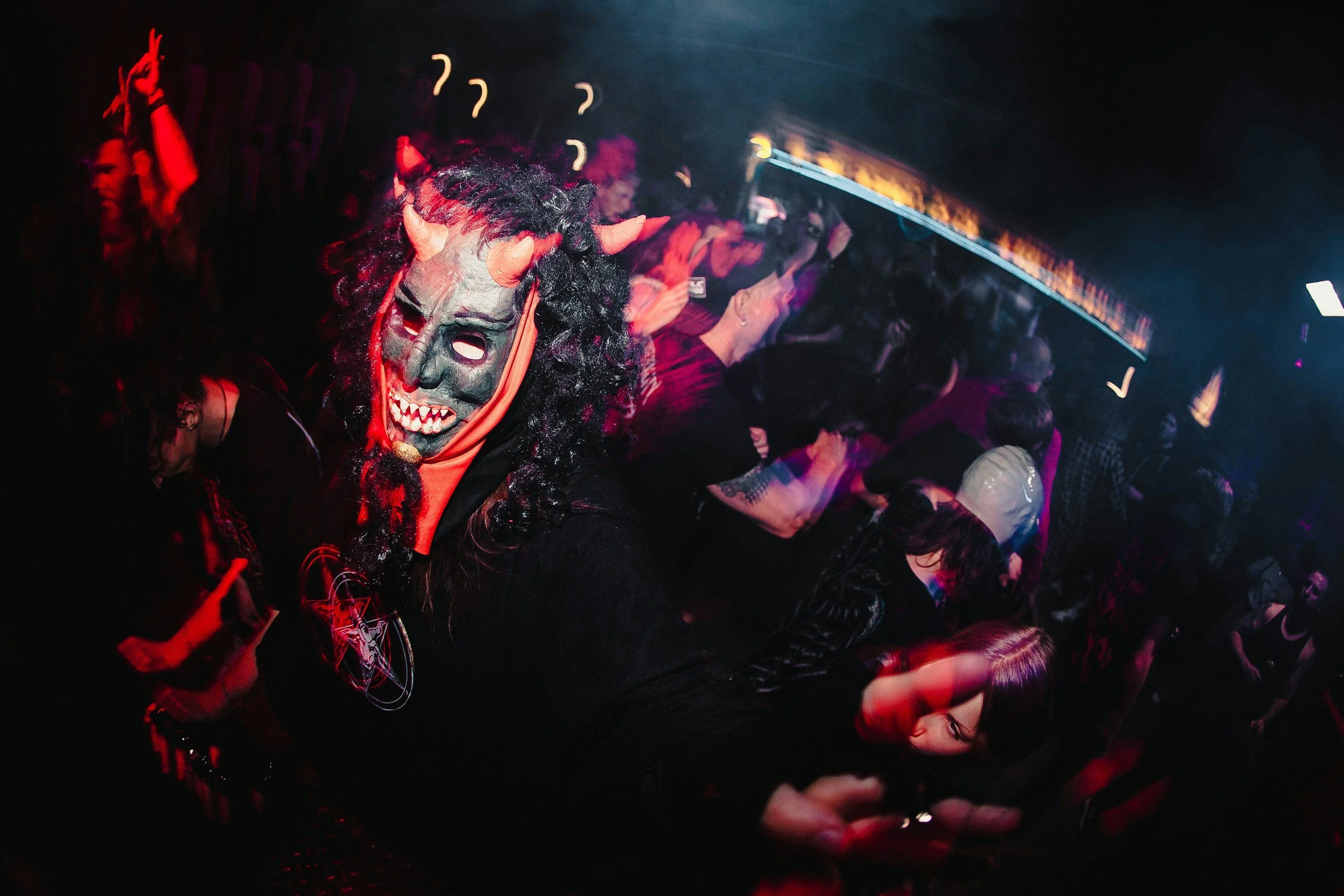
While many outside of Central and Eastern Europe—countries like Austria, Bavaria, and Slovenia—believe Krampus is simply an "evil Santa," this is a modern misconception. Krampus is not an individual; the name refers to an entire class of demonic entities, the plural of which is Krampusse. This creature is typically depicted as a terrifying, horned, half-goat, half-demon, complete with cloven hooves, shaggy dark hair, and often a grotesque mix of one cloven hoof and one human foot, a terrifying marker of his untamed nature.
The word itself, adopted in the 19th and 20th centuries, likely derives from the Middle German word Kralle (claw) or the Bavarian Krampn (dried out and lifeless).
Krampus’s main purpose is straightforward: to scare and discipline. He appears on the evening of December 5th, known as Krampusnacht ('Krampus Night'). While benevolent Saint Nick rewards the good children with gifts, Krampus is there to punish the unruly ones by leaving a switch or coal in their shoes. He uses bundles of birch branches—known as the Ruten—to swat the misbehaving, and legend states the truly wicked are violently shoved into his sack and taken away to his dark lair to be tortured or dragged to hell. The rhythmic, heavy clanging of his chains and large bells serves as the ultimate, chilling warning.
The Furious Saint: The Wyrd History of Nicholas
To truly appreciate the ferocity of the Krampus, we must first understand the sheer power of the figure he accompanies. The original Saint Nicholas was not the jolly, rotund elf of American invention, but a 4th-century Greek Christian Bishop hailing from Myra. His transformation into a patron of children began with immense, stealthy generosity—anonymously providing dowries for three impoverished sisters by tossing bags of gold through a window.
Yet, Nicholas the Wonderworker possessed a terrifying ferocity. We are reminded of the legend from the Council of Nicaea, where he became so enraged by the Arian heresy that he walked right up to the heretic Arius and slapped him across the face. Even more horrifying is the dark French tale of the Pickled Boys, where Nicholas resurrected three boys who had been murdered, chopped up, and hidden in a butcher's barrel of brine, saving them from being sold as ham. This dual capacity for profound charity and righteous, miraculous violence cemented his necessity as the opposite force to the Christmas Devil.
Pagan Roots, Demonisation, and the Battle Against the Bans
The Krampus tradition is a surviving snapshot of what Christmas folklore looked like before it was sanitised, its true origins predating Christianity entirely. Many folklorists link Krampus to the pre-Christian horned figures of Alpine pagan worship, echoing the Roman fauns, Greek satyrs, and even the Celtic god Cernunnos, the horned god of the wild.
Krampus is specifically tied to the myth of the Wild Hunt: the terrifying, nocturnal procession of ghosts and spectral beasts that rides through the winter skies. The figure's chaos, his loud, clanging bells, and his association with midwinter all directly echo this powerful, untamed pagan myth.
With the spread of Christianity, the Church was terrified of this potent, primeval figure. Rather than eradicating him, they demonised him, adapting the figure into the Christian narrative as a devil or demon. This led to centuries of attempts to suppress the tradition:
In the 16th and 17th centuries, the Catholic Church actively tried to outlaw the masked, wild runs during the Inquisition, viewing them as clear examples of devil worship.
During the rise of Fascism in the 1930s and 40s, the Krampuslauf was suppressed again, as the government viewed him as a degenerate figure of undesirable folk culture.
Even today, the battle continues, with reports of Christian leaders in America attempting to ban or stop planned Krampus parades, citing the Church’s long-standing opposition to the devil figure.
This perennial banning only underlines how powerful and unruly a symbol the Krampus remains—he represents the uncontrollable chaos that institutionalised power cannot tolerate.
The Continental Cast of Punishers and the Wessex Mirror
The concept of the saint having a dark enforcer is widespread across Europe, demonstrating that this dual approach to Christmas discipline is the norm, not the exception.
Knecht Ruprecht (Northern Germany): Often depicted as a shaggy, dark-robed figure whose face is sometimes blackened with ashes. Unlike the mass Krampuslauf, Ruprecht is a solitary companion to St. Nicholas. He carries bundles of birch switches to beat the naughty, serving as the original "man in the sack" cautionary tale.
Perchta (The Alps): A figure far older than Krampus, she is associated with the Yuletide period. Perchta embodies a terrifying dualism, appearing as both a benevolent goddess and a haggard, disembowelling hag. She enforces seasonal social morality, and her truly horrific punishment—earning her the title the Belly-Slitter—was to slice open the stomachs of the lazy, remove their organs, and replace them with stones or rubbish before sewing them up.
Hans Trapp (France): This Christmas bogeyman is actually rooted in the true story of Hans von Trotha, a 15th-century knight excommunicated for his greedy and destructive feud with a local abbot. He serves as a spectacular example of historical fact bleeding into folk legend, becoming a villain associated with the Devil.
Zwarte Piet (Netherlands and Belgium): This figure is contentious today due to the blackface tradition associated with his appearance. Unlike the ash-smeared Ruprecht, Zwarte Piet is explicitly a literary creation from an 1850 book, owing little to the Church's Devil. His traditional role, however, is undeniably that of the punisher, carrying the roe (cane) and the sack.
This same need for a horned, fear-inducing bogeyman is reflected closer to home in Wessex. The Dorset Ooser was a large, hollow wooden head with horns and a terrifying hinged jaw, kept for the purpose of scaring children and used for public humiliation known as Skimmington Riding. Structurally, the Ooser echoes the untamed Wild Man heritage of Krampus. Furthermore, the Welsh Mari Lwyd (Grey Mare), a bizarre Yuletide hobby horse constructed around a horse’s skull, challenges residents to a ritualistic battle of wits (pwnco) during the festive season.
The Enduring Power of Chaos Resurgent
Krampus hasn't just survived centuries of disapproval; he is absolutely thriving. His revival in the Alpine regions since the 1990s has turned the Krampuslauf into a massive cultural spectacle—no longer a quaint folk festival, but a sanctioned, costumed riot of rhythmic clanging bells, fire, and street theatre that chases and swathes spectators.
This spectacle has fuelled his global spread. The turning point for many in the English-speaking world was the 2015 film Krampus, which cemented his status as the anti-Santa for the pop-culture age. He has become the symbol of counter-culture Christmas, a rebellion against the corporate hyper-consumerism of the holiday.
Ultimately, the cultural embrace of Krampus is a reflection of a primal need. When Christmas offers nothing but fake cheer, Krampus provides a cathartic, visceral, and authentic element of tradition. He is the personification of the chaos that needs to be disciplined before the new year. As Al Ridenour writes, the dark side is required to complete the holiday tableau: "If nothing is bad, nothing is good." The existence of these figures reminds us that the best stories are often those that contain both the greatest fear and the greatest hope.